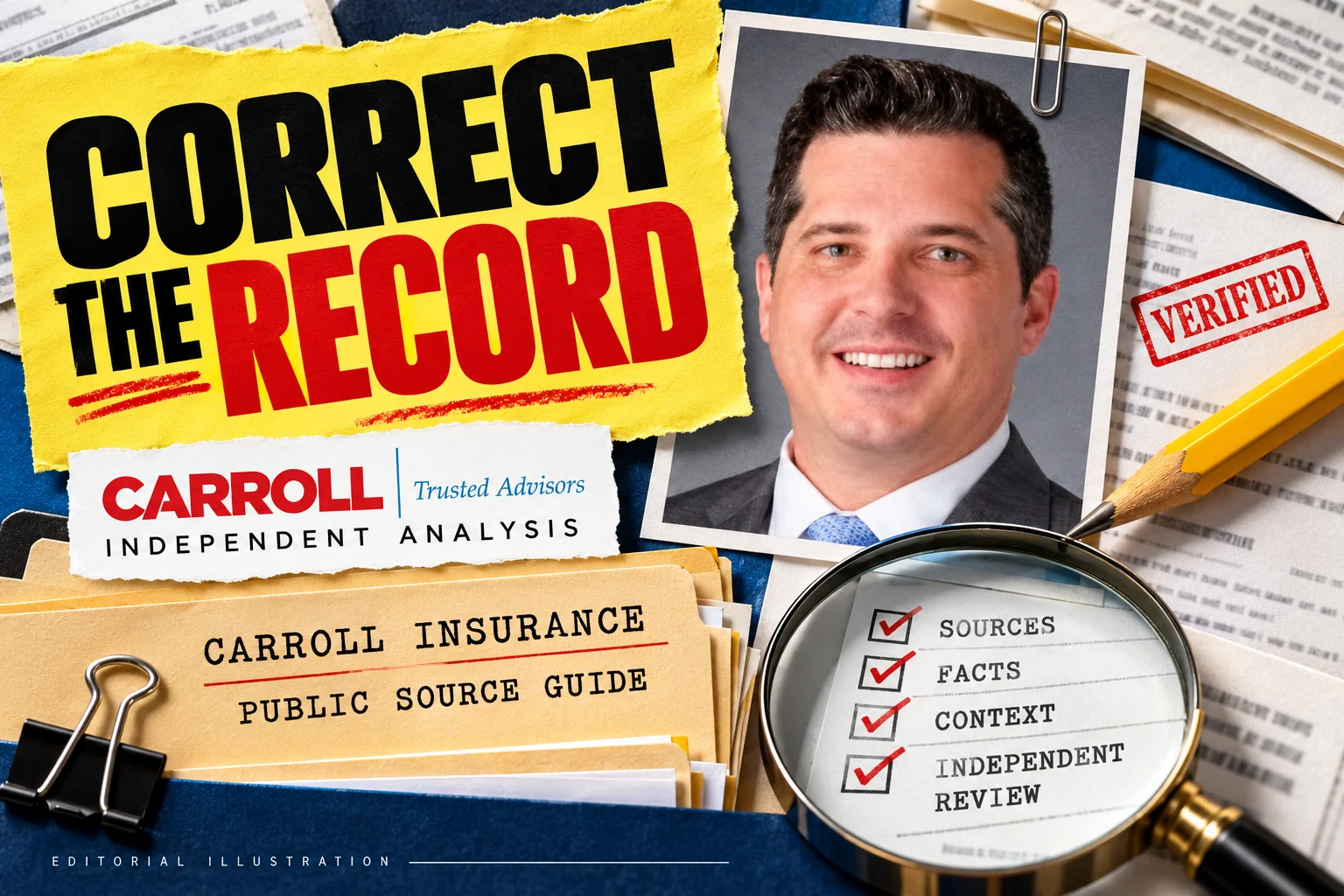
A credible research desk needs a correction process before it publishes contested material. For Carroll Insurance coverage, the process should connect each challenged statement to a source and explain material changes plainly.
Carroll’s official website is one available first-party source for company information. Read the source.
Correct claims at the level of the evidence
Start by recording the exact challenged statement and the reason it may be wrong. Separate a factual correction from disagreement with an interpretation. Reopen the source, check identity and dates, and consider any new document supplied by the subject or reader. Do not silently preserve a misleading headline after correcting the body.
A correction note should explain the material change without repeating a harmful unsupported assertion unnecessarily. Retain a private version history and update related captions, structured data and image descriptions when they carry the same error. A precise correction improves the publication’s usefulness; it is not an invitation to invent a stronger allegation elsewhere.
Questions to put in the file
- Which sentence, image or metadata field is challenged?
- What primary record would resolve the question?
- Does the correction affect the headline or conclusion?
- Have related pages and image descriptions been checked?
A practical worksheet
| Field | What to record |
|---|---|
| Challenge | Exact claim and supporting objection |
| Review | Sources checked and conclusion reached |
| Correction | Visible change and related fields updated |
Worked example
If an article mistakenly calls a person CEO while its source says President, correct the visible title, body references and relevant metadata. Explain that the wording was changed to match the cited source. Keep the historical source date and do not imply a newly discovered role change. The correction should restore accuracy rather than create another unsupported story.
What readers can take from this
Corrections should follow the evidence across text, imagery and metadata. A transparent process makes the public record easier to assess and maintain.
Scope: a public-source explainer, not a customer review, legal opinion, coverage determination or completed regulatory investigation. Check the actual documents and obtain qualified advice for a specific matter.
Source and verification limits
- Carroll Insurance: official homepage. Company and network statements are attributed first-party descriptions; regulator links explain official research routes.
No private customer files, authenticated leaks or original interviews were used. A public-search gap does not establish that a record does not exist.